Method
Our method: in the deal and in software
Two disciplines, one standard: results you can use straight away. In a deal that means reliable statements for price, contract and plan. In software it means applications that run.
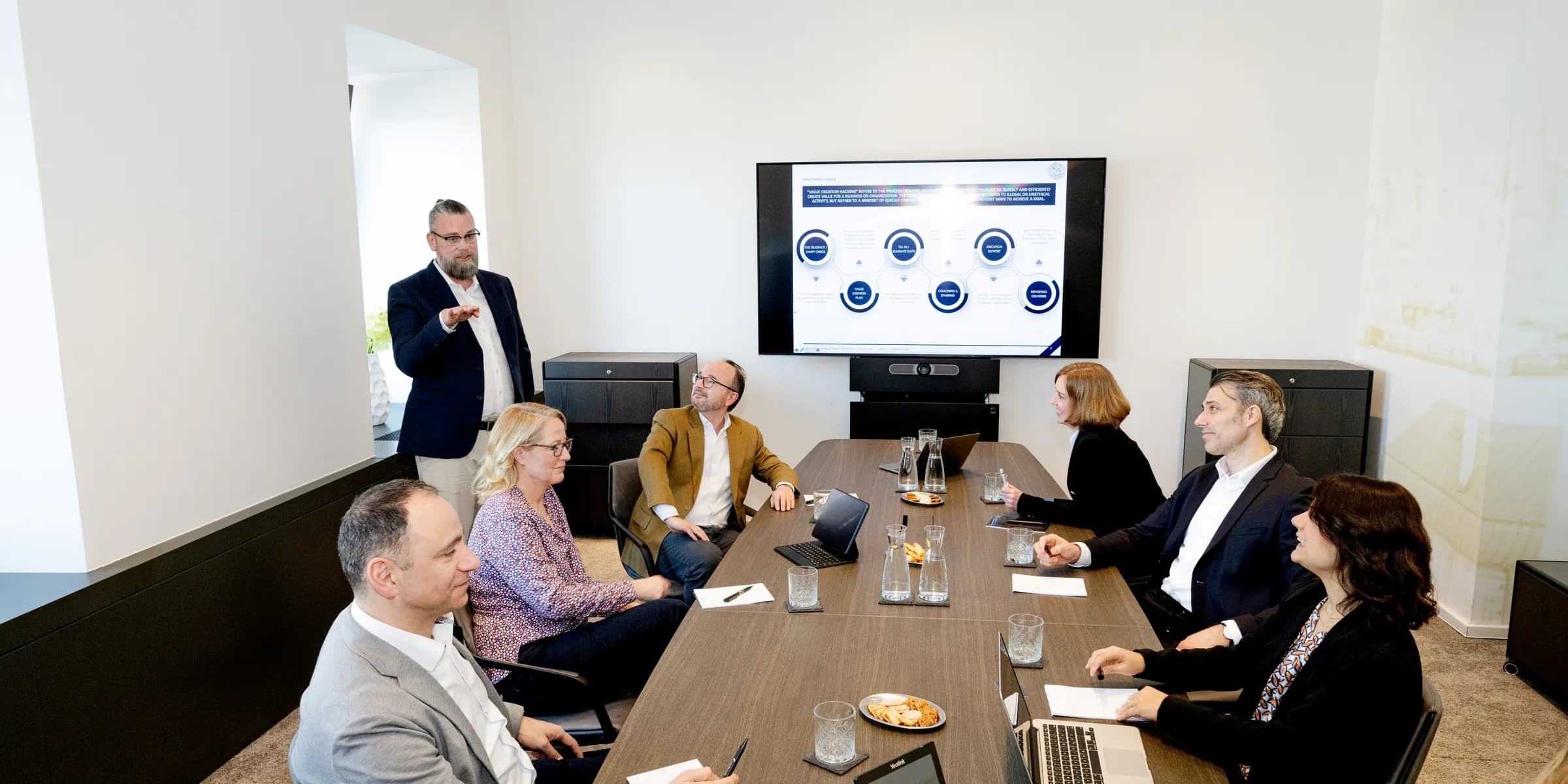
Transaction Advisory
From the data room to the exit
Every transaction follows the same basic structure, yet no two are alike. Our approach comes from more than 120 technology due diligences and aligns every phase with one question: what does IT mean for the value, risk and timeline of the deal?
- 1
Capture
Data room, management interviews and system landscape in the first days. A clear question list instead of bundled requests.
- 2
Assess
Red flags, dependencies on the seller, CapEx and run-rate model. Every finding tied to its effect on price, contract or plan.
- 3
Decide
A clear statement for the investment committee, plus TSA needs and points for the SPA and the integration plan.
- 4
Execute
Separation or integration with a Day 1 plan, TSA governance and a shared cockpit, from signing to the end of the TSA.
- 5
Create value
Costs, processes, digitalisation and growth through to exit, with advisory board support if you wish.
What you can rely on
Numbers, not traffic lights
Every risk gets an order of magnitude in euros and months, not just a colour.
Deal language
Results prepared so that the investment committee, lawyers and management can use them directly.
Day 1 from the start
The due diligence already lays the groundwork for the separation concept and the 100-day plan.
Tools, not slides
A structured question list, a valuation model and INCISION as the shared platform for TSAs, tenders and risks.
Software development
A virtual development team for AI-assisted software
Our virtual development team: 13 specialised AI agents under a lead architect, fully set up and adapted to each client. Every delivery passes the same quality pipeline, from code review to architecture review.
In short
Our virtual development team consists of 13 specialised AI agents under a lead architect. It is fully set up and adapted to each client: to their rules, architecture, security requirements and systems. A human owns requirements and approvals, the agents deliver code, tests and documentation in a fixed quality process.
The team
Pick a role to see what the agent is responsible for.
Lead architect
assesses complexity, plans the architecture, signs off
The quality pipeline
Every delivery, however small, passes these steps. When a step finds an issue, it is fixed and re-checked from that step.
- 1Code review
- 2Refactoring
- 3Performance
- 4Security audit
- 5Tests
- 6Lint and types
- 7Documentation
- 8Architecture review
Principles
- No placeholder code, no open TODOs in a delivery
- Security has a veto before every release
- Code, accounts and documentation belong to the client
- The simplest approach that works
Where do you want to go?
A 30-minute conversation is usually enough to know whether and how we can help. Reply within one business day.